Hand Wash Grade HPMC: Improving Skin Feel and Enhancing Thickening Stability

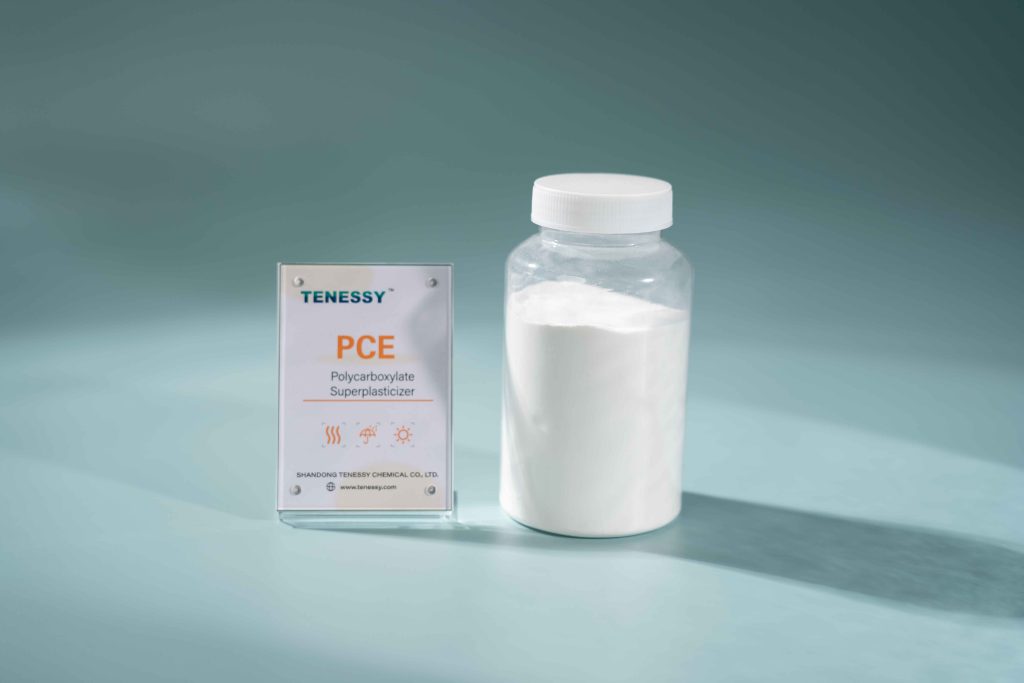
In the field of concrete admixtures, polycarboxylate superplasticizers have become an indispensable core component of modern concrete technology, owing to their high water-reducing rate, excellent slump retention performance, and environmental compatibility. Compared with conventional liquid polycarboxylate superplasticizers, solid polycarboxylate powder is gaining increasing attention due to its advantages in transportation convenience, storage stability, and suitability for specialized applications such as dry-mix mortars and grouting materials. This article will systematically analyze the key performance index system of solid polycarboxylate powder from the perspective of materials science, from water reduction rate to slump retention.
The water-reducing rate is the most fundamental performance metric for evaluating polycarboxylate powder, reflecting the dispersing capability of the admixture toward cement particles. According to the national standard GB 8076-2008, the water-reducing rate is calculated by comparing the water consumption required to achieve the same slump between a reference concrete mix and a test concrete mix containing the admixture. High-quality solid polycarboxylate powder can achieve a water-reducing rate of 38%±1%, significantly higher than conventional naphthalene-based superplasticizers (typically 18%-25%) and aliphatic superplasticizers (approximately 20%-28%).
The underlying mechanism of the water-reducing rate stems from the comb-shaped molecular structure of polycarboxylate: anionic groups such as carboxylate and sulfonate on the backbone adsorb onto cement particle surfaces, providing electrostatic repulsion, while polyoxyethylene ether side chains extend into the liquid phase, generating steric hindrance effects that effectively prevent cement particle flocculation. For solid powder products, whether this molecular configuration can be fully preserved upon dissolution directly determines the extent to which the water-reducing rate is realized.
From a molecular engineering perspective, the core variables influencing the water-reducing rate include:
Side Chain Density and Length: The density of polyoxyethylene side chains determines the strength of the steric hindrance effect. Typically, the water-reducing rate reaches an optimum balance when side chain density is in the range of 25%-35%—excessively high side chain density reduces the proportion of backbone anchoring groups, weakening adhesion to cement particles; overly short side chains provide insufficient steric hindrance, while overly long chains are prone to inter-chain entanglement, which in turn reduces dispersing efficiency.
Molecular Weight and Distribution: The weight-average molecular weight (Mw) of solid polycarboxylate powder is typically controlled between 15,000 and 40,000 Da. When the molecular weight is too low, the adsorption layer formed by the dispersant molecules on cement particle surfaces is too thin, resulting in insufficient electrostatic repulsion; when too high, the molecular dimensions become excessive, slowing diffusion rates and making the molecules susceptible to coiling under the high ionic strength environment of cement paste, thereby reducing effective adsorption. Controlling the polydispersity index (PDI) within the range of 1.5-2.5 ensures that polymer chains of varying lengths form a functional complement between “initial dispersion” and “sustained dispersion.”
When testing the water-reducing rate, strict control of experimental conditions is required: curing temperature at 20℃±2℃ and humidity ≥95% to ensure comparability and reproducibility of data. In practice, cross-adaptability tests should be conducted in combination with cement type and admixture characteristics, as the mineral composition of different cements (C₃A content, alkali content, etc.) significantly influences the adsorption behavior of the dispersant.
If the water-reducing rate determines the initial workability of concrete, slump retention determines the duration over which this workability can be maintained. It is another critical yardstick for evaluating the quality of polycarboxylate powder—particularly for high-temperature construction and long-distance transportation scenarios, where slump retention often carries greater practical significance than the initial water-reducing rate.
The mechanism of slump loss over time can be understood from three aspects: cement hydration consumes free water and increases paste viscosity; dispersant molecules are progressively covered or consumed by hydration products; and elevated ambient temperature accelerates both of the above processes. The design philosophy of high-slump-retention polycarboxylate powder is precisely targeted at these mechanisms:
At the molecular structure design level, the introduction of slump-retention functional groups such as ester groups and amide groups enables slow hydrolysis in the alkaline environment of concrete, continuously releasing carboxyl groups with dispersing capability to achieve a “slow-release supplement” of the water-reducing effect. Research indicates that the control of the acid-to-ether ratio (the proportion of carboxyl groups to polyether side chains) is critical: increasing carboxyl density can improve initial adsorption capacity, but excessive carboxyl density actually weakens slump retention performance. Typical high-retention products generally have an acid-to-ether ratio controlled between 2.5:1 and 4.0:1, whereas standard-type products fall in the range of 4.5:1 to 6.0:1.
In engineering practice, evaluation of slump retention should not rely solely on the single indicator of slump loss over time. A more scientifically robust evaluation system should include:
Rheological Parameter Monitoring: Using a rotational rheometer to measure the dynamic yield stress and plastic viscosity of cement paste over time. For polycarboxylate powder with excellent slump retention performance, the yield stress increase over 120 minutes should be less than 50% of the initial value, and the plastic viscosity growth rate should not exceed 100%. This method is more sensitive than the slump test, enabling detection of rheological deterioration that may escape visual observation.
Zeta Potential Tracking: Using an electrophoresis instrument to monitor changes in zeta potential on cement particle surfaces as a function of hydration time. When the absolute value of zeta potential remains above -15mV, the electrostatic repulsion is sufficient to maintain stable dispersion. The design target for slump-retaining dispersants is to limit zeta potential decay to no more than 30% of the initial value within 60 minutes.
Adsorption Quantity Determination: Using the total organic carbon (TOC) method to measure the adsorption amount of dispersant molecules on cement particles over time. An ideal slump-retaining product should exhibit a two-stage characteristic of “rapid initial adsorption + sustained slow-release replenishment,” rather than rapid attenuation after one-time saturated adsorption.
For practical engineering applications, the slump retention performance of solid polycarboxylate powder directly affects the feasibility of ultra-long-distance concrete transportation, high-temperature-season construction, and projects with special construction time requirements such as nuclear power plants and large dams. Taking summer conditions with ambient temperatures above 35℃ as an example, high-quality retention products can control slump loss within 20 mm over 90 minutes, whereas ordinary products may experience losses exceeding 60 mm under the same conditions.
The production of solid polycarboxylate powder is not simply a matter of “drying the liquid”; the manufacturing process directly determines whether the aforementioned performance indicators can be effectively retained. Currently, there are two primary technical routes:
Spray Drying is the more direct path, but due to the relatively low glass transition temperature of polycarboxylate superplasticizers (typically 30-50℃), problems such as wall adhesion, agglomeration, and even high-temperature degradation are prone to occur during drying, leading to molecular structure damage and performance deterioration. Additionally, surface tension effects during spray drying may cause oriented arrangement of molecular chains, affecting the redispersibility of the powder.
Bulk Polymerization, on the other hand, starts from the synthesis origin, obtaining solid products directly through melt copolymerization of monomers in a solvent-free system. This method offers advantages including high conversion rate (above 93%), pure products, and environmental friendliness, but imposes more demanding requirements on initiator selection, polymerization temperature control, and macromonomer type matching. One-step synthesis using macromonomers represented by TPEG (modified allyl alcohol polyoxyethylene ether) has become the mainstream direction for current solid powder preparation. Products from bulk polymerization exhibit better structural regularity and more uniform side-chain distribution, achieving superior balance between water-reducing rate and slump retention.
The following table compares powder products with conventional liquid polycarboxylate products across multiple dimensions:
| Comparison Dimension | Solid Polycarboxylate Powder | Liquid Polycarboxylate Product |
|---|---|---|
| Active Content | ≥96% | 40%±2% |
| Transportation Cost | Low (water-free component) | High (contains ~60% water) |
| Storage Stability | Good (≥24 months under cool, dry conditions) | Moderate (anti-freezing in winter, anti-mold in summer) |
| Dissolution Rate | Depends on particle size (60-180s) | Instantaneous dispersion |
| Water-Reducing Rate Range | 35%-40% | 30%-38% |
| Slump Retention | High-retention/standard types customizable | High-retention/standard types customizable |
| Applicable Scenarios | Dry-mix mortars, grouting materials, powder compounding | Ready-mix concrete, pre-mixed concrete |
Based on extensive engineering practice experience, the following typical issues may be encountered in the application of solid polycarboxylate powder:
Powder Caking and Incomplete Dissolution: This is mostly caused by excessively high storage environment humidity or inadequate packaging sealing. Countermeasures include: controlling storage environment relative humidity ≤60%, using composite packaging bags with inner moisture-barrier layers, and alleviating mild caking by increasing mixing time or appropriately raising water content.
Adaptability Fluctuations with Different Cements: Variations in C₃A content and gypsum morphology among different cements may cause fluctuations in the water-reducing rate. The engineering countermeasure is to establish a “test-per-batch” protocol, conducting pre-adaptability verification of the dispersant with incoming cement, and adjusting the powder dosage (within the range of 0.15%-0.35%) as necessary for compensation.
Insufficient Slump Retention Under High-Temperature Conditions: For every 10℃ increase in ambient temperature, the cement hydration rate approximately doubles, dramatically increasing the challenge of slump retention. Solutions include: selecting specialized retention-type powder with a lower acid-to-ether ratio, incorporating appropriate amounts of retarding components (such as sodium gluconate or sucrose) into the mix design, or implementing aggregate cooling measures.
To evaluate the comprehensive quality of solid polycarboxylate powder, in addition to water-reducing rate and slump retention, the following aspects also require attention:
Dissolvability: High-quality powder with 0.125mm particle size should achieve complete dissolution within 60 seconds. Excessively slow dissolution affects on-site mixing efficiency, while excessively rapid dissolution may cause localized high concentration leading to “over-dispersion” phenomena.
Storage Stability: Solid content ≥96%, with no caking or quality deterioration during long-term storage. Regular monitoring of insoluble matter content and pH value changes can effectively track product quality degradation.
Adaptability: Compatibility with different brands of cement, mineral admixtures (fly ash, ground granulated blast-furnace slag, silica fume, etc.), and aggregates directly affects engineering application results. It is recommended to conduct at least three sets of verification tests with different raw material combinations before formal use.
Uniformity Indicators: Including pH value (5.5-7.5), chloride ion content (≤0.06%), sodium sulfate content (≤5.0%), etc., which must comply with the requirements of GB/T 8077-2012 and JG/T 223-2017.
From water-reducing rate to slump retention, every performance indicator of solid polycarboxylate powder is rooted in the precise synergy between its molecular structure and manufacturing process. The former determines the economic efficiency and strength potential of the material, while the latter concerns the flexibility of construction operations and the consistency of engineering quality. With the continued development of high-speed railways, hydropower projects, prefabricated construction, and other sectors, the concrete admixture market will see growing demand for high-performance solid polycarboxylate products.
TENESSY has more than 15 years of production experience and advanced production equipment.


Fill in to get a free sample or consult for more information.
