Functional Applications of Polycarboxylate Superplasticizers in Tile Adhesives

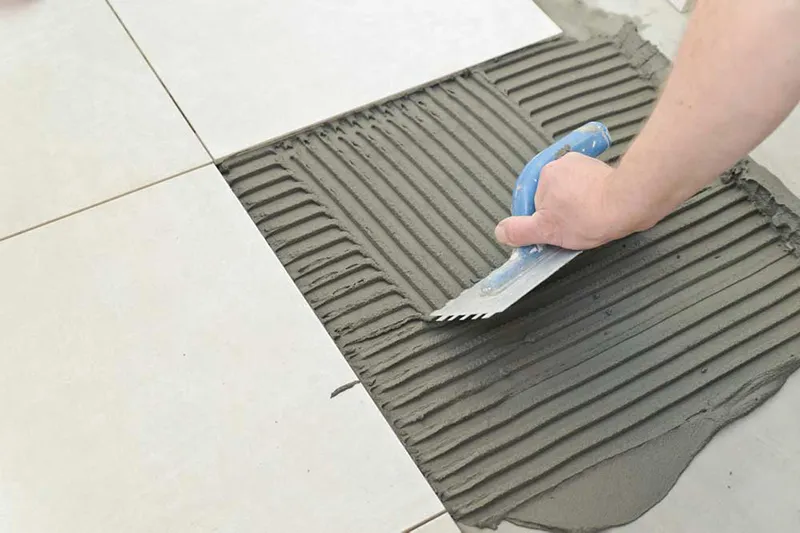
In modern construction, ceramic adhesivos para baldosas have replaced traditional cement mortar as the preferred material for tiling. However, with the popularity of large-format, low-absorption tiles such as polished tiles and microcrystalline stones, hollowing and falling off of tiles have become common quality issues.
To meet the market demand for higher bond strength, better water resistance, and improved durability, dry-mix mortar technology is undergoing a profound transformation. At the heart of this transformation, polycarboxylate superplasticizer — with its unique molecular structure and outstanding performance — has emerged as a key functional material for enhancing tile adhesive quality.
This article provides an in-depth analysis of the application principles, functional advantages, and best practices of polycarboxylate superplasticizer in tile adhesives.
Understanding why polycarboxylate superplasticizer outperforms traditional naphthalene-based or melamine-based superplasticizers requires a look into its molecular design. Unlike traditional superplasticizers that rely solely on electrostatic repulsion to disperse cement particles, the polycarboxylate molecule features a unique “comb-like” structure: a long backbone with multiple active groups and side chains extending outward.
When polycarboxylate superplasticizer is introduced into a tile adhesive system, the following physicochemical changes occur:
Adsorption and orientation alignment: The negatively charged backbone rapidly adsorbs onto the positively charged surfaces of cement particles via ionic and hydrogen bonds.
Electrostatic repulsion: The charge provided by the backbone causes cement particles to repel each other, preventing flocculation and releasing the free water trapped within the flocculated structure — achieving water reduction.
Steric hindrance: This is the key advantage of polycarboxylate superplasticizer. The long side chains extending into the aqueous solution form a thick polymer “brush” layer around each cement particle. When two particles approach, this physical barrier generates strong steric hindrance, preventing agglomeration.
This dual stabilization mechanism — electrostatic repulsion + steric hindrance — allows polycarboxylate superplasticizer to achieve extremely high dispersion efficiency at very low dosage levels, significantly reducing water demand while greatly improving mixture fluidity and slump retention.
Bond strength is a core indicator of tile adhesive quality. After adding polycarboxylate superplasticizer, the water demand of the adhesive is significantly reduced. A lower water-to-cement ratio means much lower porosity inside the tile adhesive, resulting in a denser hardened structure.
Tests show that as the dosage of polycarboxylate superplasticizer increases (e.g., from 0.15% to 0.3%), both standard bond strength y water-soaked bond strength of the tile adhesive increase significantly. This means that tiles are not only firmly bonded but also remain securely attached even in long-term wet environments such as bathrooms and kitchens.
For exterior wall tiles, high summer temperatures and repeated freeze-thaw cycles pose significant challenges. The micro-air-entraining effect of polycarboxylate superplasticizer plays a critical role here.
It introduces a large number of sub-microscopic, harmless closed air bubbles into the adhesive. These bubbles act as “cushioning airbags”: at high temperatures, they buffer stress changes and reduce damage caused by thermal expansion; in low-temperature environments, they provide reserved space for water expansion upon freezing. This significantly improves the tile adhesive’s heat-aging bond strength y freeze-thaw bond strength.
Polycarboxylate superplasticizer offers an extremely high water reduction rate (typically 20%–25% or more). Under the same fluidity requirement, it can reduce mixing water; or with the same water content, it greatly improves the troweling performance of the mortar.
This provides workers with a smoother, more “buttery” feeling during application, better slip resistance, faster installation speeds, and lower physical strain. Additionally, because early strength is enhanced, project schedules can be accelerated.
Modern construction places increasing emphasis on environmental standards. Polycarboxylate superplasticizer is manufactured without the use of formaldehyde or other harmful substances, complying with green environmental requirements. Moreover, it contains no chloride salts, posing no corrosion risk to steel reinforcement. By reducing permeability, it effectively prevents the ingress of moisture and corrosive agents, thereby improving overall durability.
Despite its superior performance, polycarboxylate superplasticizer is highly sensitive in formulation. Based on TENESSY‘s product development and application experience, the following key points are essential to achieving optimal performance in tile adhesives:
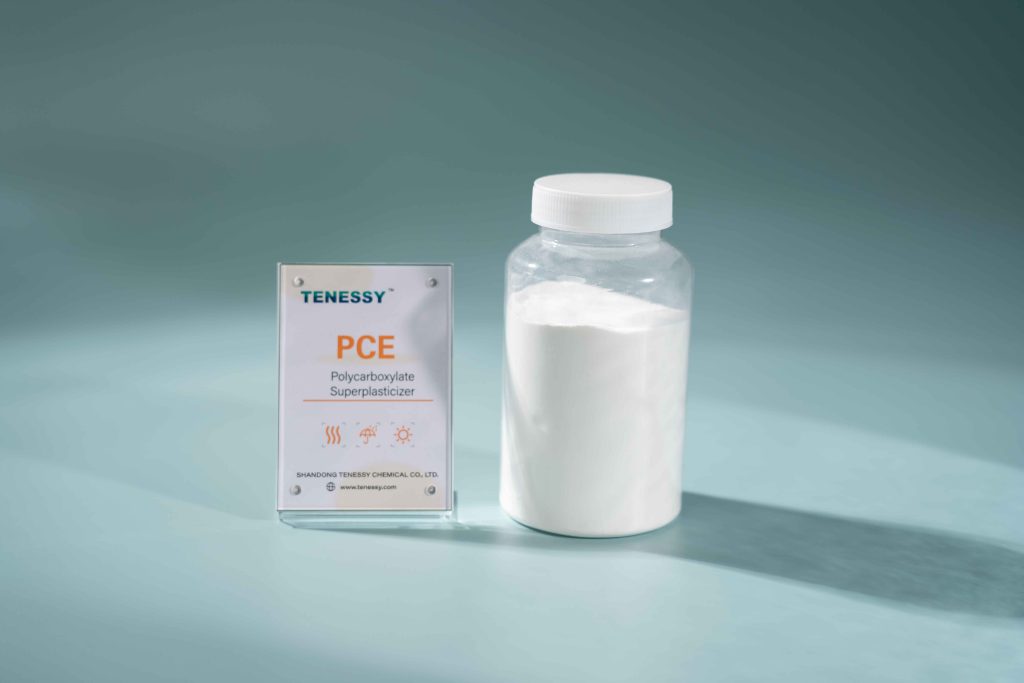
For use in dry-mix mortars (tile adhesives), polycarboxylate superplasticizer must be in powder form. This is produced by processes such as spray drying the liquid mother liquor, resulting in uniform particles, low moisture content, and good flowability — facilitating even mixing with cement, sand, and other powder additives.
Polycarboxylate superplasticizer is highly sensitive. For tile adhesives, the recommended dosage is typically 0.15%–0.3% of the total cementitious material.
Important warning: Excessive superplasticizer can lead to serious negative effects, such as excessive retardation (the mortar remains unhardened for a long time), segregation and bleeding, y layering — all of which can reduce bond strength or even cause construction failure.
Tile adhesive is a complex multi-phase system containing cement, fillers, redispersible polymer powder, cellulose ethers (HPMC), and various other additives.
Balance with cellulose ethers: Cellulose ethers thicken and retain water but also entrain air; polycarboxylate superplasticizer disperses and reduces viscosity. These two must be balanced to avoid excessive fluidity that could cause tiles to slide.
Compatibility with cement: Different brands and batches of cement (especially with varying C₃A content) have different adsorption capacities for polycarboxylate superplasticizer. Whenever cement batches are changed, compatibility testing must be performed.
For extremely low-absorption tiles such as polished tiles y full-body porcelain tiles, ordinary cement mortar cannot penetrate to form a mechanical grip. Polycarboxylate superplasticizer, by reducing the water film thickness and increasing paste density, enables the tile adhesive to form a tighter mechanical interlock with the tile backing.
From a representative of third-generation superplasticizers to a core functional material in dry-mix mortars, polycarboxylate superplasticizer is no longer just a favorite of the concrete industry — it has become an indispensable performance enhancement engine for high-quality tile adhesives.
Through its unique steric hindrance effect, it successfully addresses the workability challenges of tile adhesives at low water-to-cement ratios. By optimizing pore structure, it comprehensively enhances bond strength and durability. For contractors and manufacturers pursuing exceptional quality, the scientific adoption of polycarboxylate superplasticizer technology is the essential path toward eliminating hollowing and falling off, and stepping into an era of high-quality tiling.
TENESSY cuenta con más de 10 años de experiencia en producción y equipos de producción avanzados.


Rellene para obtener una muestra gratuita o consulte para más información.
