The Role of Redispersible Polymer Powder in Enhancing the Bond Strength of Tile Adhesives

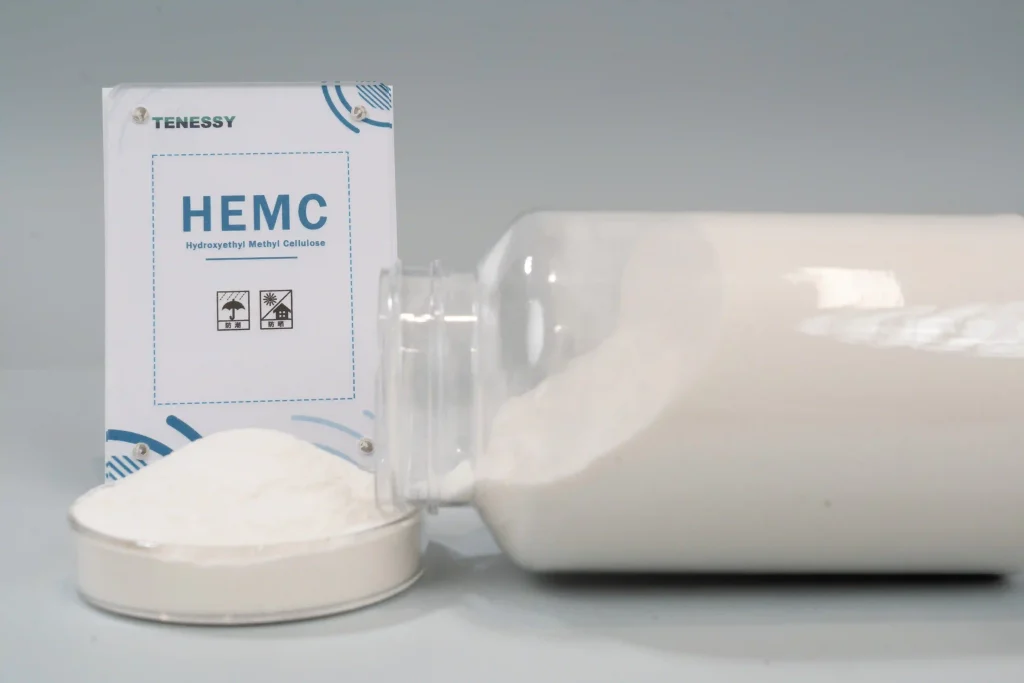
Methyl Hydroxyethyl Cellulose, usually called MHEC, is a widely used cellulose ether made from natural plant cellulose. Cellulose comes from renewable sources like wood pulp or cotton, which makes MHEC a plant-based and environmentally friendly material.
What makes MHEC special is that it dissolves easily in water and can significantly improve how many products perform. When added to water, it forms a smooth, stable solution that helps control thickness, workability, water retention, and consistency. Because of these properties, MHEC is used in many industries, especially construction materials, paints and coatings, pharmaceuticals, personal care products, and even food in limited applications.
In this article, we’ll explain what MHEC is, how it works, its key features, and where it is commonly used—all in simple, practical terms.
From a technical point of view, MHEC is a modified cellulose polymer. Natural cellulose itself does not dissolve in water, so it must be chemically modified to become useful in industrial applications.
MHEC is produced by introducing methyl groups (–OCH₃) and hydroxyethyl groups (–CH₂CH₂OH) into the cellulose backbone. Its general chemical formula is often written as:
(C₆H₇O₂(OH)₃₋ₘ(OCH₃)ₘ)ₙ
These substitutions change how cellulose interacts with water and other materials:
The result is a non-ionic, water-soluble polymer with excellent stability and compatibility.
MHEC is usually supplied as:
When mixed with cold water, it gradually hydrates and forms a clear or slightly cloudy solution.
MHEC is popular because it delivers multiple performance benefits at relatively low dosage. Some of its most important features include:
Cold water solubility
Dissolves easily in cold water without forming lumps when mixed properly.
Excellent water retention
Slows down water evaporation, especially important in cement-based systems.
Good thermal stability
Maintains performance over a wide temperature range.
Film-forming ability
Creates smooth, flexible films after drying.
Improved workability
Makes mixtures smoother and easier to apply.
Surface activity
Helps disperse pigments, fillers, and other solids evenly.
Compatibility
Works well with many other additives, binders, and polymers.
Non-ionic nature
Stable across a wide pH range and resistant to salt interference.
These properties explain why MHEC is such a versatile additive across different industries.
The construction industry is the largest user of MHEC, especially in dry-mix mortar and cement-based products. MHEC improves consistency, adhesion, and overall performance.
In self-leveling floor systems, MHEC helps:
This ensures the mixture spreads evenly and forms a flat, defect-free surface.
Tile adhesives require strong bonding and good workability. MHEC plays a key role by:
With MHEC, installers have more time to adjust tiles while maintaining strong bonding performance.
In cement plaster, MHEC helps:
This leads to smoother plaster layers and better long-term durability.
Gypsum-based products set quickly, which can be challenging. MHEC helps by:
It allows for easier application and more consistent results.
For drymix mortar, MHEC:
This makes masonry work more efficient and reliable.
MHEC is widely used in water-based paints, especially latex paints and EIFS (Exterior Insulation and Finish Systems).
In coatings, MHEC functions as:
It helps:
Because MHEC is non-ionic, it remains stable in different paint formulations and works well with various binders.
In the pharmaceutical industry, MHEC is valued for its safety, purity, and consistency.
Common uses include:
MHEC helps control viscosity, improve stability, and form protective films. It is generally considered safe when produced according to pharmaceutical standards.
MHEC is also found in many personal care and cosmetic products, such as:
In these products, MHEC:
Because it is gentle and plant-derived, it fits well with modern “clean label” and mild formulations.
In some regions, MHEC is approved for limited food use as a thickener or stabilizer. It may be used in:
However, food-grade MHEC must meet strict regulatory and purity requirements, and its use is more restricted compared to industrial applications.


While MHEC offers many advantages, it also has some limitations.
pH sensitivity
Performance may change in extremely acidic or alkaline systems.
Dosage control
Too much MHEC can cause excessive thickness or slow setting.
Compatibility issues
Not all grades work well with every formulation.
Cost considerations
High-quality MHEC may increase material costs if not optimized.
Environmental concerns
Although plant-based, chemical processing still requires energy and resources.
Ongoing research and development focus on:
As industries move toward greener and more efficient materials, MHEC continues to evolve.
Methyl Hydroxyethyl Cellulose (MHEC) is a highly versatile cellulose ether that plays an essential role in modern formulations. From construction materials like tile adhesives and mortars to paints, pharmaceuticals, personal care products, and even food applications, MHEC helps improve performance, stability, and usability.
Its water solubility, excellent water retention, film-forming ability, and broad compatibility make it a reliable choice across industries. While there are challenges related to formulation and sustainability, ongoing innovation ensures that MHEC will remain an important material in the future of cellulose polymers.
For manufacturers and formulators looking for a proven, plant-based additive with wide application potential, MHEC remains a smart and future-ready solution.
TENESSY has more than 10 years of production experience and advanced production equipment.


Fill in to get a free sample or consult for more information.
