The Role of Redispersible Polymer Powder in Enhancing the Bond Strength of Tile Adhesives

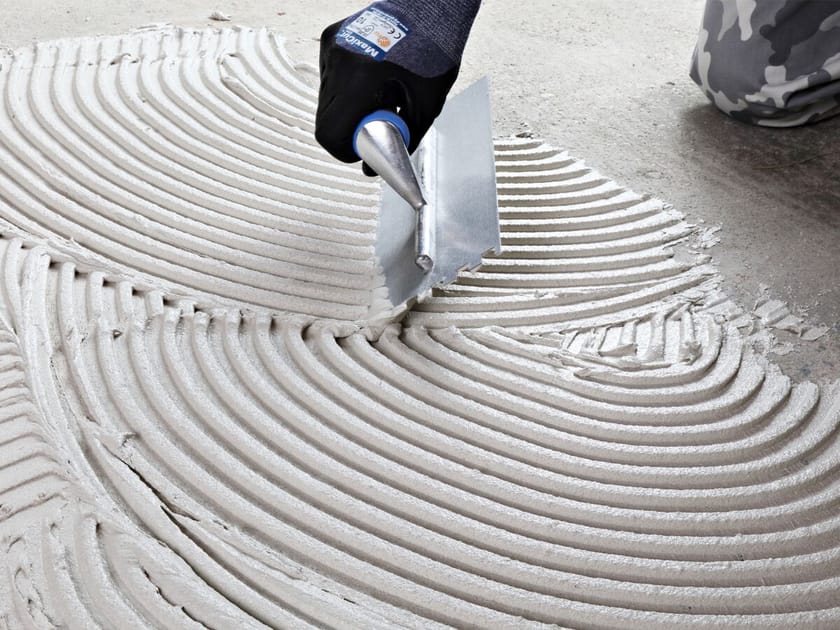
In the modern thin-bed tile installation system, redispersible polymer powder has become a core functional additive for improving the comprehensive performance of tile adhesives. It significantly enhances key characteristics such as bond strength, flexibility, water resistance, and aging resistance. Conventional cement-based tile adhesives rely on cement hydration for strength but suffer from issues such as high brittleness, poor flexibility, weak compatibility with low-absorption tiles, and a tendency to cause hollowing or detachment. When redispersible polymer powder is incorporated, it forms a polymer film structure within the system, working synergistically with cement hydration products. This enhances bonding reliability through multiple mechanisms, including interface bonding, internal structure, and mechanical properties, making it the critical component for high-quality tile adhesives to achieve “strong adhesion, no cracking, and no falling off.”
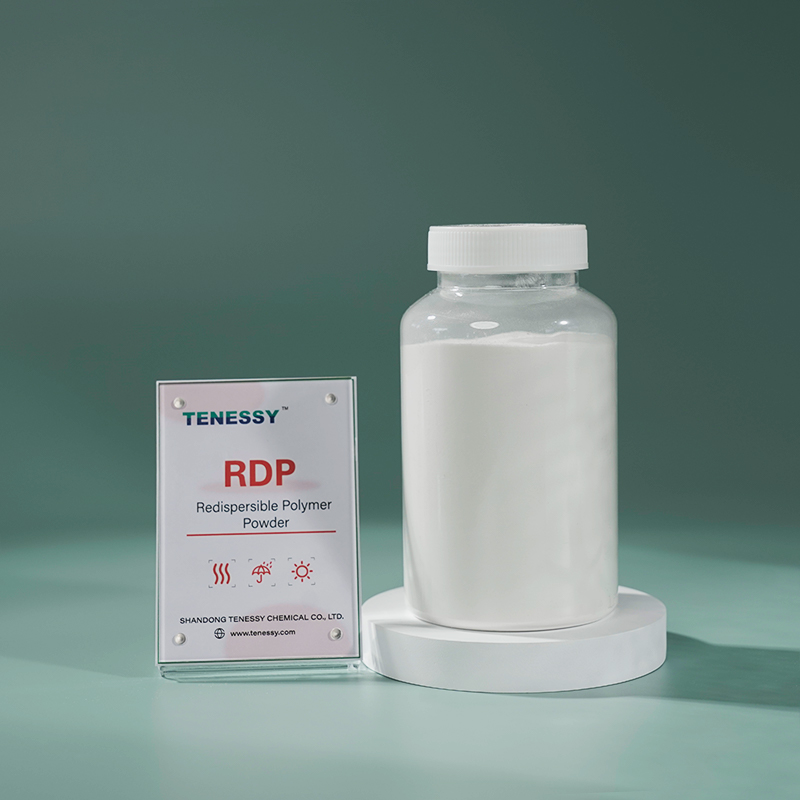
Redispersible polymer powder is a polymer powder that, when mixed with water, redisperses into a stable emulsion. During the water consumption and hydration process within the cement-based system, it gradually forms a film. Its mechanism of action is primarily threefold:
Interface Enhancement: The polymer powder significantly improves the wettability and penetration of the adhesive onto the tile back and substrate. It fills microscopic pores on the interface, reduces interface defects, and creates stronger mechanical interlocking and physical adhesion.
Internal Reinforcement and Densification: The polymer film seals internal capillary pores, reduces the generation and propagation of micro-cracks, increases the system’s density, lowers water absorption, and improves water resistance and durability.
Cement-based systems rely on hydration products and interface interlocking for bonding, which often results in high brittleness and limited interfacial adhesion. Adding polymer powder:
Enhances the adhesive’s bonding strength to tiles, especially low-absorption materials like porcelain tiles, full-body tiles, and marble.
Improves tensile bond strength and shear strength, creating a monolithic structure between the adhesive, tile, and substrate.
Significantly reduces the probability of interface debonding and hollowing, fundamentally improving the reliability of the bond.
Wet environments like bathrooms, balconies, and external walls can easily degrade tile adhesive strength. The polymer film formed by the powder:
Reduces the water absorption rate of the system, blocking pathways for moisture ingress.
Minimizes the damage of water to interfacial bonding, ensuring high bond strength even after water immersion.
Effectively prevents softening, debonding, and tile falling caused by prolonged dampness.
Substrate settlement, temperature changes, and micro-deformations in the substrate can easily cause cracking and delamination of the tile adhesive. The polymer powder imparts excellent toughness:
Absorbs stress and buffers deformation, preventing rigid fractures.
Reduces hollowing, cracking, and warping caused by contraction and expansion due to temperature changes.
Makes the adhesive suitable for installing large-format tiles and thin porcelain panels.
Exposure to sunlight, freeze-thaw cycles, and wet-dry cycles can rapidly deteriorate the performance of ordinary tile adhesives. Polymer powder:
Improves resistance to freeze-thaw cycles, thermal aging, and wet-dry cycling.
Ensures that long-term strength does not drop precipitously.
Extends the service life of the tile installation system, reducing the risk of future repairs.
Polymer powder enhances thixotropy, water retention, and sag resistance:
Reduces sagging, making it suitable for installing large tiles on walls.
Improves water retention, ensuring adequate cement hydration and preventing false setting or insufficient strength.
Enhances paste uniformity, increasing the effective bonding area and reducing hollowing.
The effectiveness of redispersible polymer powder is closely related to its dosage, which typically ranges from 1.5% to 3.0% of the total dry mix weight.
| Dosage Range | Effect on Tile Adhesive Performance | Suitable Product Type |
|---|---|---|
| 0–1.0% | Weak modification effect, limited strength improvement | Standard low-grade tile adhesive |
| 1.5%–2.0% | Noticeable improvement in strength, toughness, water resistance | C1 Enhanced-grade tile adhesive |
| 2.0%–3.0% | Optimal overall performance, strong adhesion, excellent water resistance | C2 High-performance-grade / Large-format tile adhesive |
| >3.0% | Increased cost, slower drying, marginal strength gain | High-performance / Special application adhesives |
Within a reasonable range, bond strength increases with the amount of polymer powder. Beyond the optimal dosage, the improvement diminishes, potentially leading to issues like excessive viscosity and slow drying.
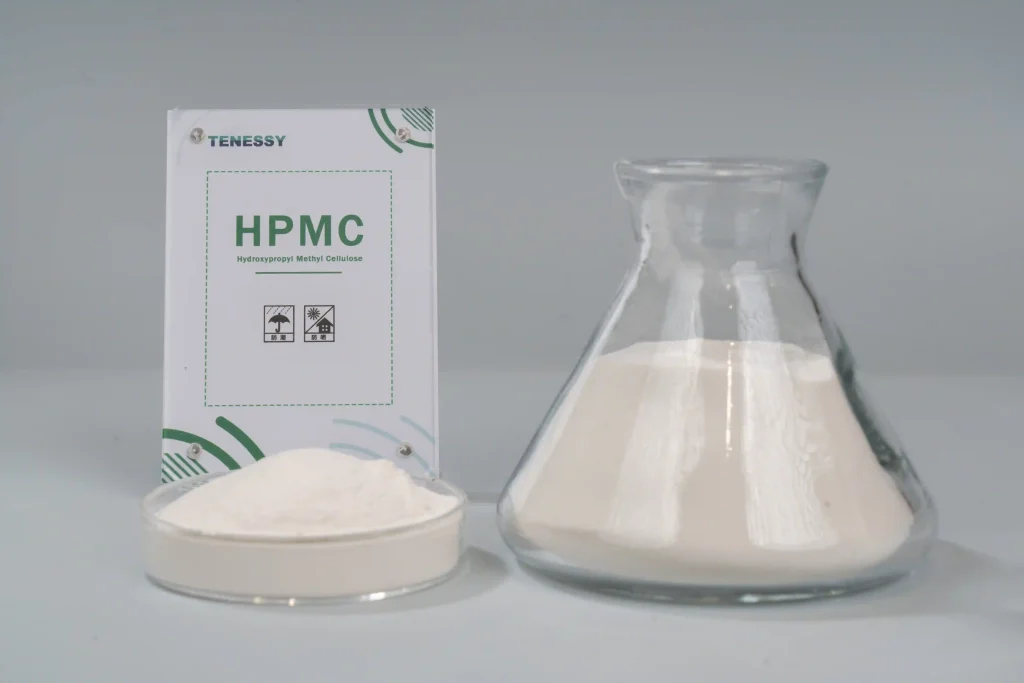
Redispersible polymer powder is typically used in combination with hydroxypropyl methylcellulose ether (HPMC) to create a highly effective synergistic system:
Polymer Powder: Provides flexibility, adhesion, and water resistance, enhancing long-term strength and stability.
The combination achieves: good workability + high early strength + durable bond + water and aging resistance. This constitutes the standard formulation system for high-quality tile adhesives.
Redispersible polymer powder fundamentally enhances the bond strength, water resistance, flexibility, and durability of cement-based tile adhesives through multiple mechanisms, including film formation for toughening, interface reinforcement, densification for impermeability, and stress buffering. It not only increases initial bond strength but also ensures long-term bonding reliability under complex conditions such as moisture exposure, temperature fluctuations, and prolonged use.
TENESSY has more than 10 years of production experience and advanced production equipment.


Fill in to get a free sample or consult for more information.
