The Role of Redispersible Polymer Powder in Enhancing the Bond Strength of Tile Adhesives

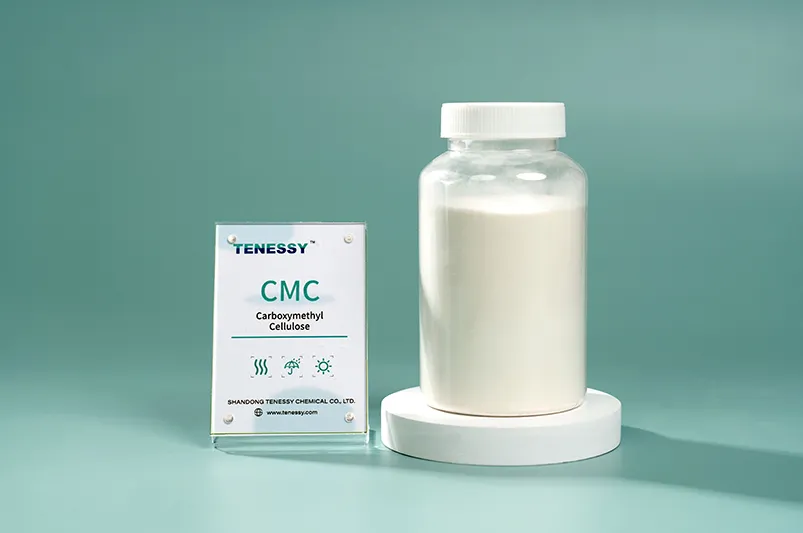
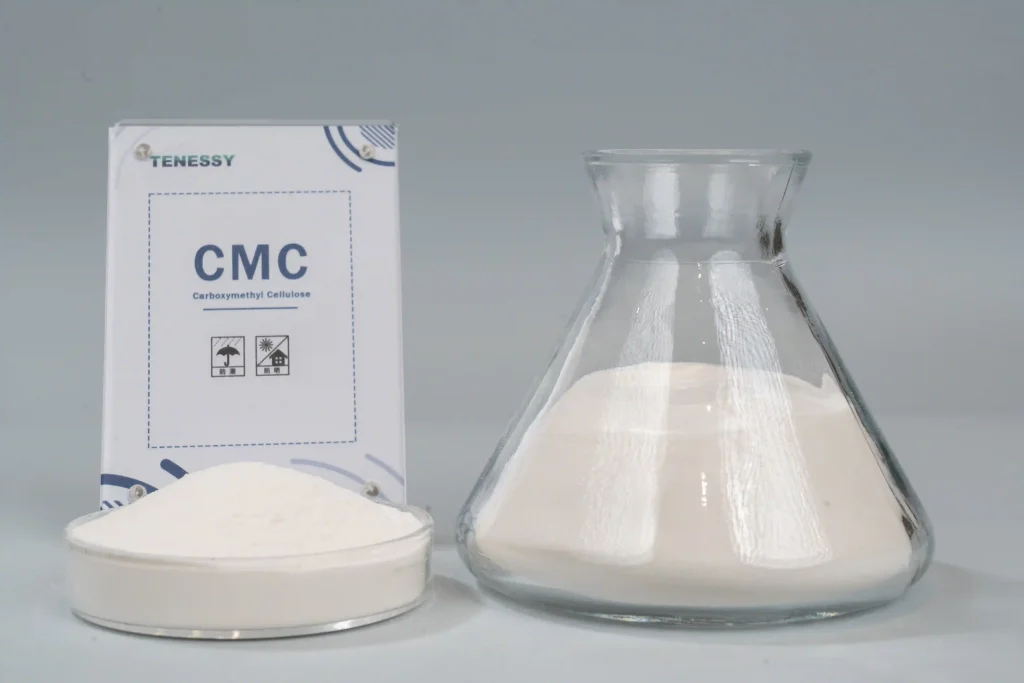
CMC is the abbreviation for Sodium Carboxymethyl Cellulose, an important cellulose derivative produced by substituting the hydroxyl groups (-OH) on natural cellulose (such as wood or cotton) molecular chains with carboxymethyl groups (-CH₂COO⁻).
| Property | Description |
|---|---|
| Appearance | White or slightly yellow fibrous powder, odorless, tasteless, non-toxic |
| Solubility | Easily soluble in cold or hot water, forming a transparent viscous solution; insoluble in organic solvents like ethanol or acetone, but soluble in 60% aqueous ethanol or acetone solutions |
| Density | Approximately 1.050 g/cm³ (15–18℃) |
| Hygroscopicity | Hygroscopic; must be stored in a cool, dry environment |
| Thermal Stability | Stable to light and heat; viscosity decreases with temperature; discoloration temperature 227℃, carbonization temperature 252℃ |
| pH Stability | Solution stable within pH 2–10; solid precipitates when pH < 2, viscosity decreases when pH > 10 |
Solutions are neutral or slightly alkaline with excellent thickening, suspending, emulsifying, film-forming, and water retention capabilities.
Thixotropy
High-degree-of-polymerization, low-degree-of-substitution CMC solutions exhibit time-dependent viscosity changes, beneficial for processing flow control.
Pseudoplasticity
Viscosity decreases with increasing shear rate and rapidly recovers after shear cessation, ensuring usage stability.
Ionic Crosslinking Capability
Carboxyl groups on molecular chains can crosslink with metal ions (e.g., Al³⁺) to enhance mechanical properties.
Whether you’re looking for industrial-grade carboxymethyl cellulose, CMC for rubber applications, or high-viscosity CMC polymers, we provide the solutions you need.
As a multifunctional additive in the paper industry, CMC (Sodium Carboxymethyl Cellulose) primarily leverages its thickening, water retention, dispersing, bonding, and film-forming properties to significantly improve paper quality and production efficiency.
The carboxymethyl groups (-CH₂COO⁻) on CMC molecular chains can form hydrogen bonds and electrostatic interactions with pulp fibers, fillers, and coating particles, thereby:
Dosage: Typically 0.3%–1% of oven-dry pulp weight
Functions:
Applicable Paper Grades:
Newsprint, cultural paper, specialty paper, packaging paper
Dosage: 0.5%–2% of total coating weight
Functions:
Product Advantage:
Paper-grade CMC with high etherification and low viscosity provides optimal performance.
Application Method: Used in combination with oxidized starch, PVA, etc.
Functions:
Applicable Paper Grades:
Coated paper, white board, food packaging paper, art paper
| Advantage Dimension | Specific Performance | Economic Value |
|---|---|---|
| Increased Machine Speed | Higher coating solids, reduced wet coating moisture, lower drying load | 15–25% production efficiency increase |
| Quality Improvement | Enhanced strength, surface smoothness, and printability | Higher finished product rate, lower re-pulping rate |
| Cost Reduction | Reduced adhesive consumption, improved filler retention | 5–10% overall cost savings |
| Environmental Friendliness | Biodegradable, reduces hazardous chemical usage | Meets green papermaking standards |


CMC viscosity is typically measured in 1% aqueous solution at 25℃.
| Viscosity Grade | Viscosity Range (mPa·s) | Core Characteristics |
|---|---|---|
| Low | 200–4,000 | Good fluidity, weak thickening, focused on dispersion & suspension |
| Medium | 4,000–6,000 | Balanced thickening and fluidity, strong versatility |
| High | 6,000–12,000 | Strong adhesion, excellent film-forming, high stability |
Note: “Ultra-low viscosity” (<100 mPa·s) products are also used in industrial fields for special dispersion systems.
Key Features: Excellent fluidity, clean taste, easy dispersion
Key Features: Balanced comprehensive performance, widest applicability
Key Features: Strong adhesion, high stability, excellent film-forming
| Application Scenario | Recommended Viscosity | Key Considerations |
|---|---|---|
| Clear beverages | Low (<2,000) | Clean taste, no cling |
| Yogurt/dairy | Medium (4,000–6,000) | Protein stabilization, smooth texture |
| Meat products/ice cream | High (>6,000) | Strong water retention, anti-melting |
| Paints/mortar | Medium–High | Balance of rheology and workability |
| Oilfield drilling | High (>6,000) | Wellbore stability, fluid loss control |
| Pharmaceutical gels | High (>8,000) | Long-lasting adhesion, film-forming |
TENESSY has more than 10 years of production experience and advanced production equipment.


Fill in to get a free sample or consult for more information.
