HPMC de qualité « lavage à la main » : amélioration du toucher et renforcement de la stabilité de l'épaississement

Le béton est un matériau essentiel dans la construction, mais il n'est pas à l'abri des difficultés. L'un des problèmes les plus courants et les plus coûteux qui se posent lors d'une construction en béton est le suivant fissuration. Qu'elles soient dues à des changements de température, à une perte d'humidité ou à un retrait, les fissures peuvent compromettre la durabilité, l'apparence et l'intégrité structurelle du béton. Heureusement, l'utilisation d'additifs pour béton appropriés permet de réduire considérablement, voire d'empêcher la formation de ces fissures.
Dans ce guide, nous allons explorer cinq additifs efficaces pour le béton qui peuvent aider à prévenir les fissures : HPMC en poudre, Poudre de polymère RDP, Fibres PP, Fibres d'acier, et Superplastifiant à base de polycarboxylate. En comprenant le rôle de chaque additif, vous pouvez choisir celui qui convient le mieux à votre projet pour garantir une finition lisse, durable et résistante aux fissures.
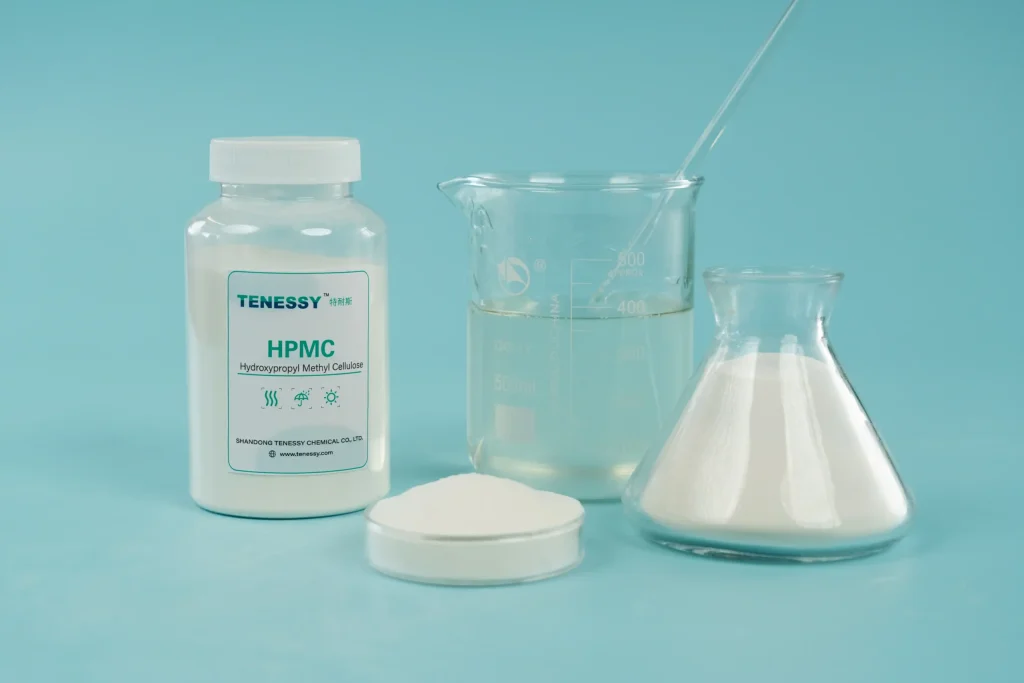
HPMC (Hydroxypropylméthylcellulose) est un type d'éther de cellulose couramment utilisé dans les mortiers secs et le béton. Cette poudre est un additif clé connu pour ses propriétés retenir l'eau les propriétés et la capacité à améliorer l'ouvrabilité dans les matériaux de construction.
Le béton a tendance à se dessécher rapidement, surtout lorsqu'il est exposé à la chaleur et à la sécheresse. Lorsque l'humidité contenue dans le mélange s'évapore trop rapidement, elle peut provoquer fissures de retrait du plastique, qui se produisent avant que le béton n'ait complètement pris. La poudre HPMC aide à prévenir ce phénomène en retenant l'humidité dans le mélange de béton, ce qui permet aux particules de ciment de s'hydrater correctement et de durcir uniformément.
En maintenant le niveau d'humidité plus longtemps, le HPMC réduit le risque de fissuration de la surface pendant les premiers stades du durcissement. Ceci est particulièrement utile dans les cas suivants environnements à température modérée où l'évaporation rapide peut être un problème.
Meilleur pour :
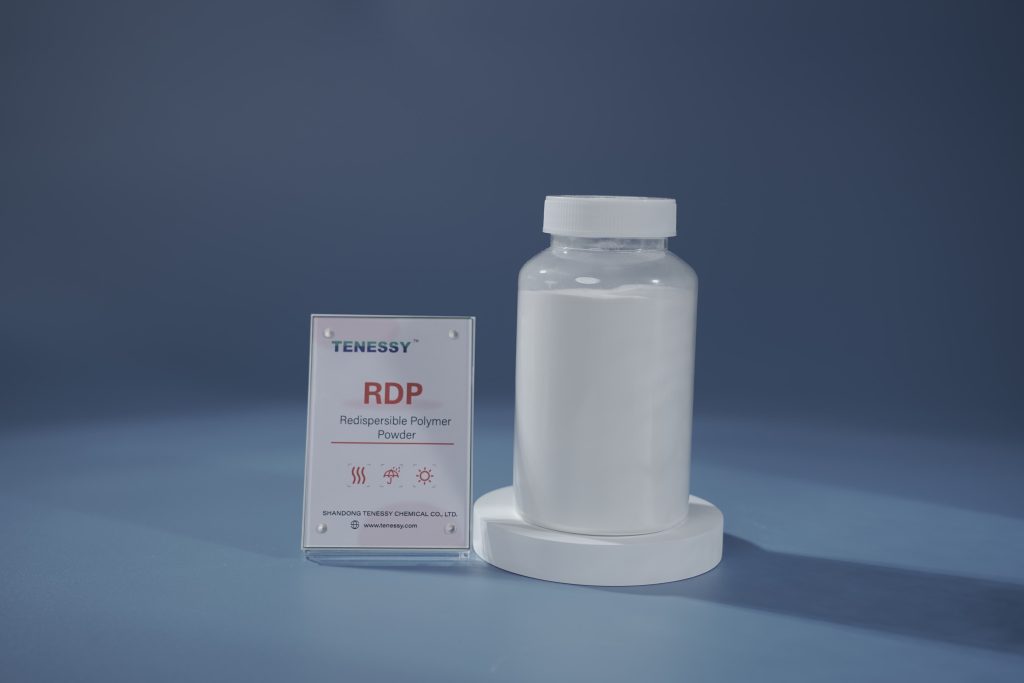
RDP est une poudre fabriquée à partir de polymères à base d'eau qui sont couramment utilisés pour améliorer la adhésion, flexibilité, et résistance à l'eau du béton et du mortier. Lorsqu'il est mélangé à l'eau, le RDP se dissout et se disperse dans le béton, ce qui permet d'obtenir un mélange plus cohésif et plus durable.
Le béton peut se fissurer sous l'effet de rétrécissement et contraintes thermiques qu'il guérit. Poudre de polymère RDP améliore la résistance à la flexion du béton, ce qui le rend plus résistant à la fissuration sous contrainte. Il améliore également la collage entre les particules, empêchant le béton de se séparer lors du retrait.
En outre, le RDP contribue à résistance aux fissures en améliorant la plasticité du béton, ce qui le rend plus flexible et plus apte à résister aux chocs. petits mouvements thermiques et mécaniques sans se fissurer.
Meilleur pour :
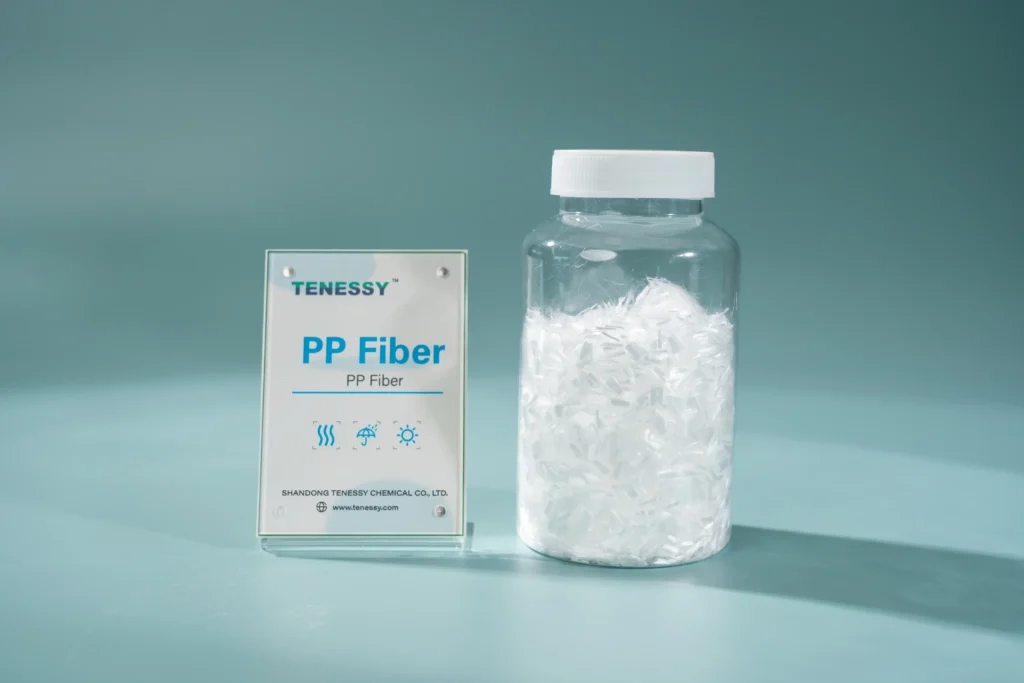
Fibres de polypropylène (PP) sont fibres synthétiques utilisées pour renforcer le béton. Il s'agit de petites fibres minces qui sont ajoutées au mélange de béton pour en améliorer les propriétés mécaniques. Les fibres PP aident à prévenir les fissures en créant une Réseau de renforcement 3D dans la matrice de béton.
Les fibres PP agissent comme un agent de contrôle des fissures, contribuant ainsi à répartir le stress uniformément dans le béton. Lorsque le béton durcit et subit un retrait, ces fibres empêchent la formation d'une couche d'ozone. propagation des microfissures, qui peuvent se transformer en fissures visibles au fil du temps.
Les fibres sont particulièrement efficaces pour contrôler fissuration par rétraction du plastique pendant les premières phases de durcissement, lorsque le béton est le plus susceptible de se fissurer. Ils améliorent également la résistance à la traction et ductilité du béton, ce qui le rend plus résistant à l'usure. impact et abrasion.
Meilleur pour :
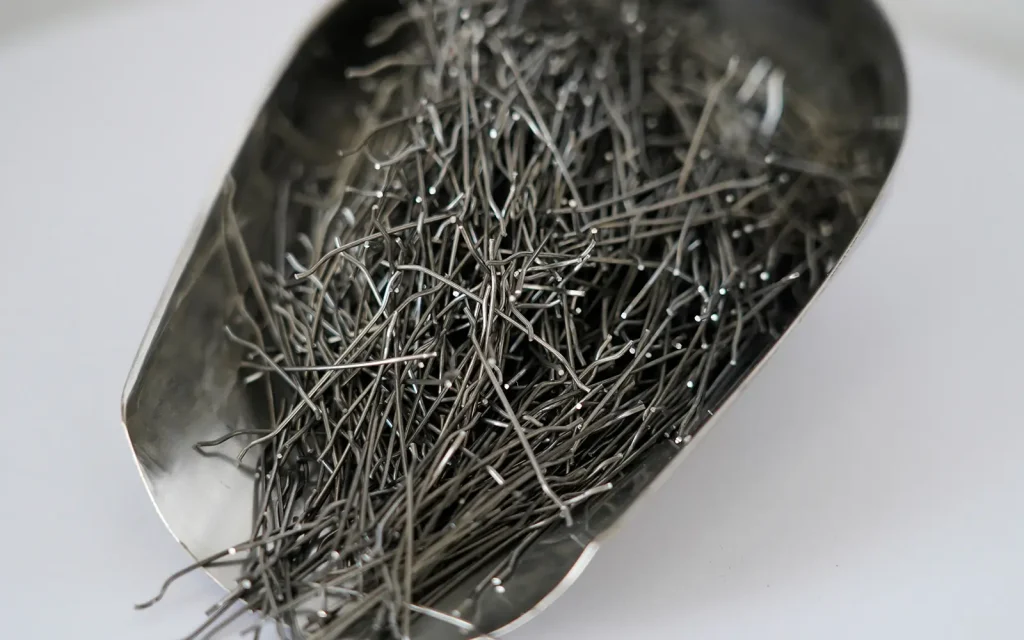
Les fibres d'acier sont de courtes pièces d'acier ajoutées au béton pour en améliorer la résistance. l'intégrité structurelle. Ils sont fabriqués en acier à haute résistance et sont utilisés pour renforcer Le béton est protégé contre diverses contraintes, y compris celles causées par le retrait et les fluctuations de température.
Les fibres d'acier assurent une résistance aux fissures en renforçant la matrice du béton et en empêchant la formation et la propagation des grandes fissures. Ils répartir le stress uniformément sur toute la surface, réduisant ainsi la probabilité de fissures causées par les contraintes thermiques, le retrait ou les forces extérieures.
En outre, l'utilisation de fibres d'acier améliore la qualité de l'air. résistance à la flexion et résistance aux chocs du béton, ce qui le rend idéal pour les structures exposées à de fortes contraintes et à un trafic intense.
Meilleur pour :
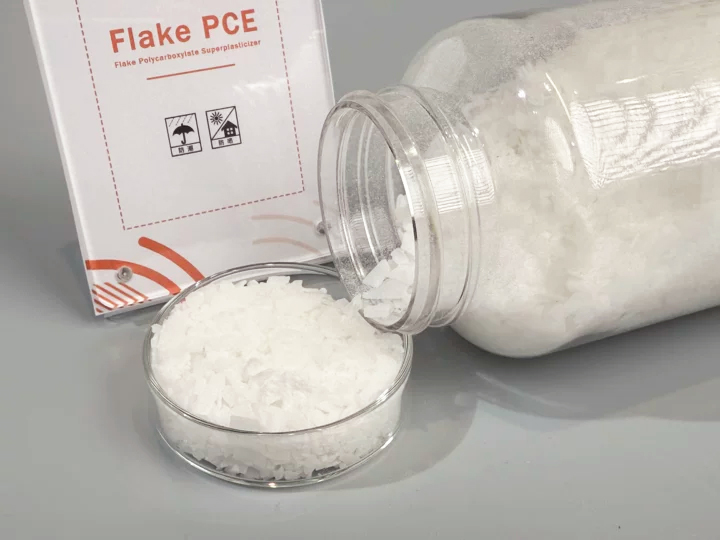
Superplastifiant à base de polycarboxylate (PCE) est un outil moderne et performant agent réducteur d'eau utilisé dans les mélanges de béton. Il permet béton à haute résistance sans compromettre la maniabilité.
L'une des principales causes de fissuration du béton est la teneur en eau excessive nécessaire pour un mélange correct. L'ajout d'une trop grande quantité d'eau augmente le risque de fissures de retrait lors du séchage du béton. Le PCE réduit la quantité d'eau nécessaire au mélange tout en maintenant la qualité du béton. la maniabilité du béton, ce qui conduit à une plus dense et plus fort le produit final.
En réduisant le rapport eau/ciment, le PCE contribue également à durcissement rapide et développement précoce de la force, qui est particulièrement utile dans les cas suivants bétonnage par temps froid. En outre, l'ECP réduit le rétrécissement dû au séchage, Le béton est donc plus résistant à la fissuration au fil du temps.
Meilleur pour :
Le choix du bon additif pour le béton dépend de plusieurs facteurs, dont les suivants les conditions environnementales, le type de béton Le choix de l'additif doit tenir compte de la nature de l'additif utilisé et des exigences spécifiques du projet. Voici un guide rapide pour vous aider à choisir le bon additif :
Les fissures dans le béton sont un problème courant dans la construction, mais avec les bons additifs, vous pouvez réduire considérablement le risque de fissuration et améliorer la durabilité de vos structures en béton. Qu'il s'agisse d'une meilleure rétention de l'humidité, d'une flexibilité accrue ou d'une meilleure résistance aux fissures, HPMC en poudre, Poudre de polymère RDP, Fibres PP, Fibres d'acier, et Superplastifiant à base de polycarboxylate sont autant de solutions efficaces pour prévenir les fissures.
Chaque additif a une fonction unique et le choix du bon additif dépend des exigences spécifiques de votre projet et des conditions environnementales. En incorporant ces additifs dans votre mélange, vous pouvez vous assurer que votre béton est solide, durable et résistant à la fissuration pour les années à venir.
Pour obtenir des conseils d'experts sur la sélection des bons additifs pour votre mélange de béton, n'hésitez pas à contacter notre équipe à l'adresse suivante Tenessy. Nous sommes spécialisés dans la fourniture d'additifs pour béton de haute qualité, testés et approuvés par les professionnels du monde entier.
TENESSY dispose de plus de 15 ans d'expérience dans le domaine de la production et d'équipements de production de pointe.


Remplissez le formulaire pour obtenir un échantillon gratuit ou consulter pour plus d'informations.
