How Polycarboxylate Superplasticizer Improves Gypsum Statues with Stable and Long-Lasting Color Effects

However, during the production of gypsum statues, problems such as insufficient strength and uneven coloration may occur, resulting in inadequate aesthetic appeal, weak stability, and failure to effectively convey the intended artistic effect.
Superplasticizers can indeed simultaneously produce positive effects on both the strength and aesthetics of gypsum statues by reducing the water-gypsum ratio and improving paste fluidity. The specific effects and key information are as follows:
1. Core Mechanism of Superplasticizers
Water Reduction and Strength Enhancement: Through physicochemical action (electrostatic repulsion + steric hindrance), superplasticizers disperse gypsum particles, releasing free water trapped in flocculated structures. Standard consistency water consumption can be significantly reduced from 65%-80%, resulting in a denser hardened structure and substantially improved strength.
Improved Fluidity: Acting as a gypsum flow enhancer, the superplasticizer enables the paste to fill molds more easily, reducing bubbles and defects, and producing smoother, finer surfaces after demolding.
2. Strength Improvement Effects
Flexural Strength: Combined use of polycarboxylate superplasticizer with other additives can increase flexural strength by 2.3 times.
Compressive Strength: Melamine superplasticizer (SMF) performs optimally at 0.3wt% dosage, simultaneously improving both flexural and compressive strength.
Mechanism: Superplasticizers create a denser internal structure in gypsum with better-developed crystals, thereby enhancing overall mechanical performance.
3. Aesthetic Improvement Effects
Surface Quality: Reduced water-gypsum ratio results in denser hardened surfaces with fewer pores, yielding higher smoothness after polishing.
Detail Expression: Improved paste fluidity enables more complete filling of fine textures and complex sections, reducing defects.
Reduced Bubbles: Better dispersibility decreases bubble accumulation, significantly reducing surface pinholes.
| Type | Effectiveness | Characteristics | Suitability |
|---|---|---|---|
| Polycarboxylate (PC) | ★★★★★ | High water reduction, good fluidity, moderate retarding | Most suitable for gypsum statues |
| Melamine (SMF) | ★★★★☆ | Obvious strength improvement, optimal at 0.3% dosage | Economical choice |
| Naphthalene (FDN) | ★★★☆☆ | Moderate effect, requires attention to mixing method | Usable but not optimal |
| Calcium Lignosulfonate (MG) | ★☆☆☆☆ | Unsuitable for gypsum, poor effect | Should be avoided |
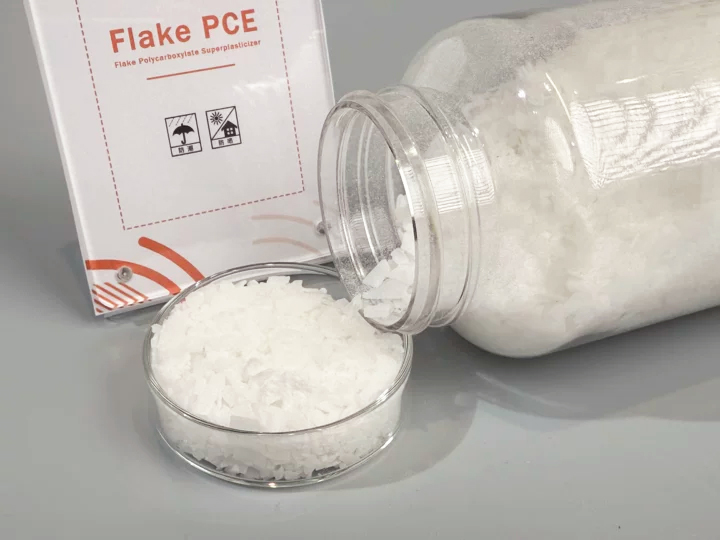
1. Process Performance Improvement
2. Mechanical Performance Enhancement
3. Artistic and Economic Benefits
1. Recommended Dosage
Pure gypsum system: 0.2%~0.4% (by gypsum mass), achieving approximately 26% water reduction with optimal comprehensive performance.
Composite system: When combined with cement (2%~5%), can alleviate retarding side effects and further improve strength.
2. Issues Requiring Attention
Retarding Effect: PCE slightly extends final setting time; excessive dosage (>0.5%) may cause strength reduction.
التوافق: Should not be mixed with naphthalene-based superplasticizers; compatibility testing required when compounding with foaming agents or retarders.
Gypsum Type Adaptability: More effective for β-hemihydrate gypsum; molecular structure optimization required for α-high-strength gypsum.
3. Practical Formulation Reference
When producing craftworks such as anime figures and decorative statues, the following formulation may be used:
Recommended Formulation (Balancing Strength and Color)
| Material | Proportion (by weight) | Function |
| High-whiteness gypsum powder | 1000g | Base material |
| Polycarboxylate superplasticizer | 3-4g | Core water reduction and strengthening |
| Water | 370-400ml | Low water-gypsum ratio ensures density |
| Glass fiber (chopped) | 10-15g | Crack resistance enhancement |
| Optional: Portland cement | 50g | Synergistic enhancement (does not affect whiteness) |
| Optional: Whitening agent | 1-2g | Whiteness enhancement (e.g., titanium dioxide) |
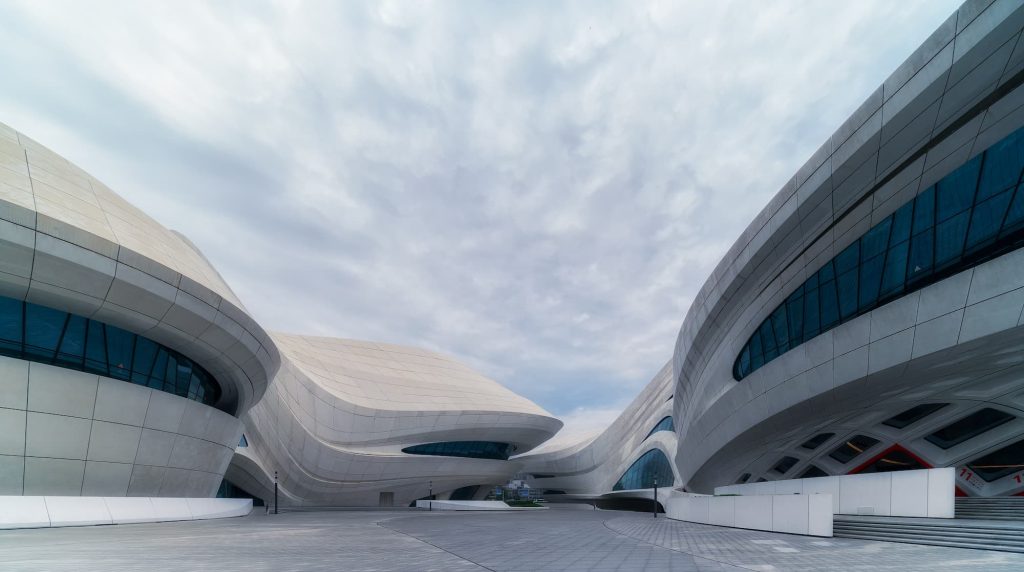
1. High-Performance Concrete (HPC)
Major Projects: Core admixture for national key projects such as the Three Gorges Dam, Sutong Bridge, Hangzhou Bay Sea Crossing Bridge, and Beijing-Shanghai High-Speed Railway.
Technical Advantages: Water reduction rate of 25-30%, maximum exceeding 50%, significantly reducing water-binder ratio and enhancing durability.
Applicable Scenarios: Engineering projects with stringent requirements for strength and durability, including high-rise buildings, bridges, tunnels, and nuclear facilities.
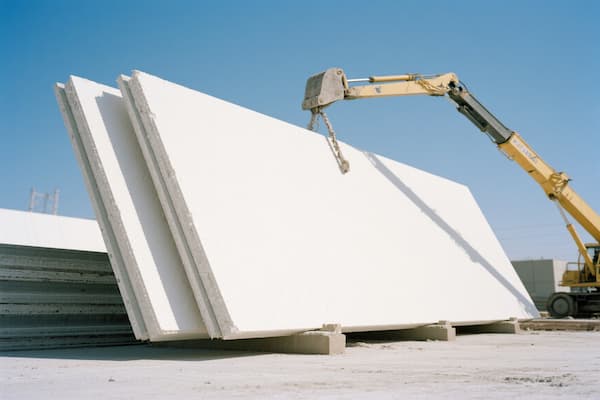
2. Precast Components
Product Types: Concrete panels, pipes, bricks, etc.
Benefits: Improves early strength, shortens demolding cycles, and enhances surface finish smoothness.
3. Self-Compacting Concrete (SCC)
Core Value: Achieves self-leveling to fill complex molds without vibration, reducing labor and noise pollution.
Technical Match: PCE’s excellent slump retention (maintaining concrete workability) is key to SCC success.
4. Mortar and Plastering Materials
التطبيقات: Tile adhesives, self-leveling mortar, repair mortar.
Performance Improvement: Enhances bond strength, improves workability, and reduces shrinkage cracking.
1. Alkali-Activated Materials (AAM)
Innovative Application: Acts as modifier for eco-friendly cementitious materials, enhancing alkali resistance through molecular structure modification.
Effects: Improves fluidity of alkali-activated paste, reduces porosity, and enhances mechanical and durability performance.
2. Specialty Concrete
3. Other Emerging Fields
Water reduction rate up to 26%, strength improvement over 30%, and significant surface finish enhancement (though not explicitly listed in search results, the chemical mechanism is analogous to concrete).
> Polyether Monomers: Raw materials for PCE synthesis, whose performance directly affects final product dispersibility and slump retention capacity.
> Functional Compounding: Combined with slump retainers, retarders, expansion agents, etc., to create systematic product solutions.
Policy-Driven: The Ministry of Railways’ Provisional Technical Conditions for High-Performance Concrete of Passenger Dedicated Lines (2005) and the Ministry of Construction’s industry standards (2007) propelled PCE to become mainstream as the third-generation high-performance superplasticizer.
Application Expansion: From major engineering projects to general civil construction; from high-strength concrete to conventional concrete below C40 grade.
Green Attributes: Formaldehyde-free production process with low chloride ion content, meeting environmental building material standards.
تتمتع TENESSY بأكثر من 10 سنوات من الخبرة في الإنتاج ومعدات الإنتاج المتقدمة.


املأ بياناتك للحصول على عينة مجانية أو استشر للحصول على مزيد من المعلومات.
