Hand Wash Grade HPMC: Improving Skin Feel and Enhancing Thickening Stability

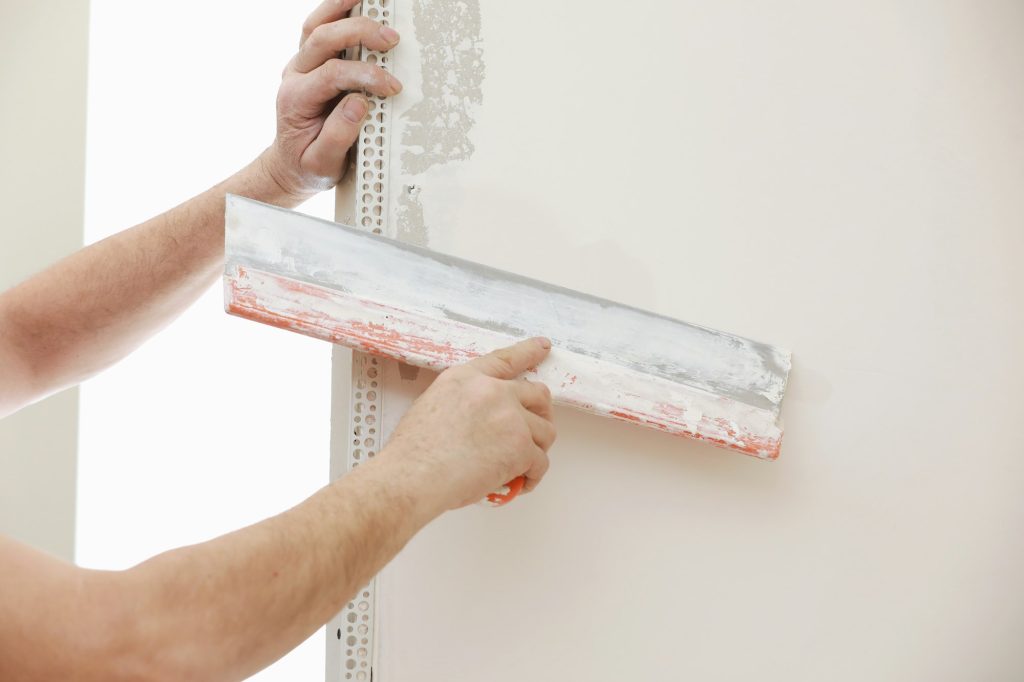
In the formulation systems of gypsum-based building materials (such as gypsum plaster, bonding gypsum, joint filler, gypsum-based self-leveling compounds, etc.), Hydroxypropyl Methylcellulose (HPMC) plays a decisive role as a core additive, directly affecting the workability, mechanical properties, and final quality of the product.
HPMC primarily functions in gypsum-based materials to provide water retention, thickening, lubrication, and extended open time. However, different types of gypsum products have significantly different technical requirements for HPMC. Selecting an inappropriate HPMC grade can lead to workability difficulties, insufficient bond strength, hollowing, cracking, and other quality issues.
This article is intended for gypsum building material manufacturers and formulation engineers. It systematically reviews the selection requirements of HPMC for gypsum-based building materials from a practical application perspective, helping customers make scientifically sound and reasonable product selection decisions.
The hydration process of gypsum requires sufficient water. If water evaporates too quickly or is absorbed by the substrate, it can lead to insufficient gypsum hydration, manifested as surface powdering, insufficient strength, and reduced adhesion.
The molecular structure of HPMC contains a large number of hydroxyl groups. These hydrophilic groups form hydrogen bonds with water molecules, absorbing and retaining water through chemical adsorption. This water retention capacity ensures that gypsum has sufficient time to complete the hydration reaction after application.
Practical value: Extends the open time of construction and prevents strength deficiencies and surface cracking caused by water loss.
HPMC increases the viscosity of the gypsum paste, imparting good thixotropy and a smooth, lubricious feel. This makes application easier while preventing the paste from flowing on vertical surfaces.
Practical value: Improves construction efficiency, enhances troweling feel, and reduces labor intensity for workers.
When constructing in high-temperature or dry environments, the open time of gypsum materials is significantly reduced. HPMC forms a network structure within the paste, slowing down the rate of water evaporation and providing a sufficient operating window for construction.
Practical value: Adapts to different construction environments and reduces construction problems caused by temperature changes.
The combined water retention and thickening functions of HPMC effectively reduce shrinkage stress in gypsum materials during the hardening process, lowering the risk of hollowing and cracking.
Practical value: Improves project quality and reduces the rate of rework.
Different types of gypsum-based building materials have different performance requirements for HPMC. Based on industry practice and experimental data, the following sections provide detailed explanations by product category.
Application characteristics:
Gypsum plaster is primarily used for leveling and plastering interior walls, with a typical application thickness of 5-20mm. It requires good flowability, water retention, and workability.
HPMC selection requirements:
Viscosity range: 2000-40000mPa·s
Addition rate: Typically 0.15%-0.3% of total dry powder
Key performance indicators: Water retention, lubricity, open time
Selection recommendations:
Gypsum plaster has high requirements for workability. Medium viscosity HPMC is recommended to ensure water retention while avoiding excessive viscosity that makes application difficult. For summer construction, HPMC with a high gel temperature (high degree of substitution) is recommended to address the impact of high-temperature environments on water retention.
Application characteristics:
Bonding gypsum is primarily used for bonding materials such as gypsum boards and insulation panels, requiring high bond strength and anti-slip properties.
HPMC selection requirements:
Viscosity range: 30000-60000mPa·s
Addition rate: Typically 1.5‰-2‰ of total dry powder
Key performance indicators: Anti-slip properties, bond strength, water retention
Selection recommendations:
Bonding gypsum has high requirements for anti-slip performance. Medium-high viscosity HPMC is recommended. If the anti-slip effect of HPMC alone is insufficient, a small amount of starch ether can be added to improve thixotropic properties.
Application characteristics:
Joint filler is used for filling gypsum board joints, requiring low shrinkage, no cracking, and easy sandability.
HPMC selection requirements:
Viscosity range: 20000-50000mPa·s
Addition rate: Typically 0.2%-0.4% of total dry powder
Key performance indicators: Water retention, shrinkage resistance, sandability
Selection recommendations:
Joint filler has high requirements for shrinkage and crack control. HPMC with excellent water retention is recommended to ensure adequate gypsum hydration and reduce shrinkage.
Application characteristics:
Gypsum-based self-leveling compound is used for floor leveling, requiring excellent flowability, self-healing properties, and pumpability.
HPMC selection requirements:
The selection of HPMC varies significantly depending on application thickness and substrate type:
| Application Scenario | Recommended Viscosity Grade | Addition Rate Range | Main Advantages |
|---|---|---|---|
| Standard self-leveling (≤5mm) | 400-20000mPa·s | 0.15%-0.25% | High flowability, easy pumping |
| Desulfurized gypsum-based self-leveling | 20000-50000mPa·s | 0.2%-0.3% | Balances water retention and flowability, reduces separation risk |
| High-strength/thick-layer self-leveling (8-10mm) | 50000-100000mPa·s | 0.3%-0.4% | Enhances sag resistance, suitable for thick-layer applications |
Selection recommendations:
Gypsum-based self-leveling compounds have the highest requirements for balancing flowability and water retention. Low-viscosity HPMC helps improve flowability but may have insufficient water retention capacity. High-viscosity HPMC provides good water retention but may affect flowability. It is recommended to determine optimal parameters through small-scale testing.
Viscosity is the most intuitive performance indicator of HPMC, but higher is not necessarily better.
Too low viscosity: Insufficient water retention, short open time
Too high viscosity: Difficult application, sticky paste, difficult air bubble removal, increased cost
TENESSY recommendation: Select the appropriate viscosity range based on the specific product type rather than blindly pursuing high viscosity.
The degree of substitution directly affects the gel temperature and water retention performance of HPMC:
| Grade | Methoxy Content | Hydroxypropyl Content | Gel Temperature |
|---|---|---|---|
| Type 60 | 28.0-30.0% | 7.0-12.0% | 58-64℃ |
| Type 65 | 27.0-30.0% | 4.0-7.5% | 62-68℃ |
| Type 75 | 19.0-24.0% | 4.0-12.0% | 70-90℃ |
Selection considerations:
In high-temperature summer construction environments, HPMC with a higher gel temperature (Type 75) is recommended to avoid reduced water retention capacity due to rising temperatures.
Quick-dissolving grade (surface-treated): Disperses quickly in water, suitable for dry-mix mortars, resists clumping during mixing
Slow-dissolving grade (standard): Requires alkaline conditions or heating for complete dissolution, more suitable for liquid systems
Selection considerations: Quick-dissolving HPMC should be prioritized for gypsum-based dry-mix mortars to ensure uniform dispersion during mixing and avoid clumping issues.
Lower ash content indicates higher product purity. Low-cost HPMC may contain more inorganic salts or by-products, which can affect the bond strength and durability of gypsum products.
Selection considerations: The ash content indicator on test reports should be reviewed during procurement to ensure compliance with quality requirements.
The particle fineness of HPMC affects its dispersion uniformity in dry-mix mortars. The typical requirement is 100% passing through an 80-mesh screen.
Possible causes:
Increased temperature accelerates gypsum hydration
Low gel temperature of HPMC leads to reduced water retention capacity at high temperatures
Recommended solutions:
Select HPMC with high gel temperature
Appropriately increase HPMC dosage (requires experimental verification)
Use in combination with retarders
Possible causes:
Different sources of gypsum (natural gypsum, desulfurized gypsum, phosphogypsum) have different adsorption capacities for HPMC
Differences in gypsum fineness, purity, and impurity content
Recommended solutions:
Conduct small-scale tests each time the gypsum batch is changed
Adjust HPMC dosage or change the grade if necessary
Establish an internal database of compatibility between different gypsum raw materials and HPMC
Possible causes:
Insufficient HPMC dosage
Improper selection of HPMC viscosity grade, resulting in insufficient particle suspension capacity
Recommended solutions:
Appropriately increase HPMC dosage
Select a higher viscosity grade of HPMC
Experimental data shows that in desulfurized gypsum-based self-leveling compound with the addition of 50000mPa·s viscosity HPMC, the sedimentation layer thickness is only 0.8cm after 24 hours of static settling, while the control group without HPMC has a sedimentation layer thickness of 3.2cm.
Possible causes:
HPMC viscosity is too high
Insufficient lubricity of the selected HPMC grade
Recommended solutions:
Try a lower viscosity grade of HPMC
Add a small amount of starch ether to improve workability
The dosage of HPMC directly affects the performance of gypsum materials. Based on experimental research data, the following summarizes the effects of dosage variation.
Within a certain range, as HPMC dosage increases, water retention improves significantly. When HPMC dosage exceeds a certain critical value, the improvement in water retention slows down, while the negative effects of increased viscosity (such as reduced flowability and difficulty in air bubble removal) begin to appear.
An appropriate amount of HPMC helps optimize the pore structure of the hardened gypsum, positively affecting mechanical properties. Research on EPS-phosphogypsum composite systems indicates that when the HPMC dosage is 0.20%, EPS remains largely non-separating in the paste, and the strength of the hardened body is relatively optimal.
Too low HPMC dosage leads to easy bleeding and segregation of the paste. Too high dosage makes the paste viscous, difficult to apply, and hinders air bubble removal.
TENESSY recommendation: The optimal HPMC dosage should be determined through experimentation based on the specific product type, raw material characteristics, and construction requirements. Blindly increasing dosage is not advisable.
Hydroxypropyl Methylcellulose (HPMC) is an indispensable functional additive in gypsum-based building materials. Different product types—gypsum plaster, bonding gypsum, joint filler, and gypsum-based self-leveling compound—have differentiated requirements for HPMC in terms of viscosity, degree of substitution, dosage, and other indicators.
The correct selection strategy is: Based on the specific product type and application scenario, select the appropriate viscosity grade and degree of substitution, and determine the optimal dosage through testing.
TENESSY recommends that customers conduct thorough formulation validation when changing raw material batches or developing new products, and establish an internal database of compatibility between raw materials and HPMC. For further information on HPMC selection solutions or to conduct formulation testing, please contact the TENESSY technical team.
TENESSY has more than 15 years of production experience and advanced production equipment.


Fill in to get a free sample or consult for more information.
